Monastic traditions reveal happiness isn’t avoidance of hardship, but skillful transformation of suffering—a core tenet explored by figures like Thich Nhat Hanh.
The Core Principle: Transforming Suffering
Buddhist teachings emphasize that true happiness isn’t found in escaping pain, but in understanding and embracing it as a catalyst for growth. This echoes Thich Nhat Hanh’s “No Mud, No Lotus” philosophy, where suffering is essential for blossoming.
Monks don’t deny hardship; they skillfully transform it through mindfulness and compassion. This process isn’t passive acceptance, but active engagement with discomfort, leading to profound inner peace and lasting joy.
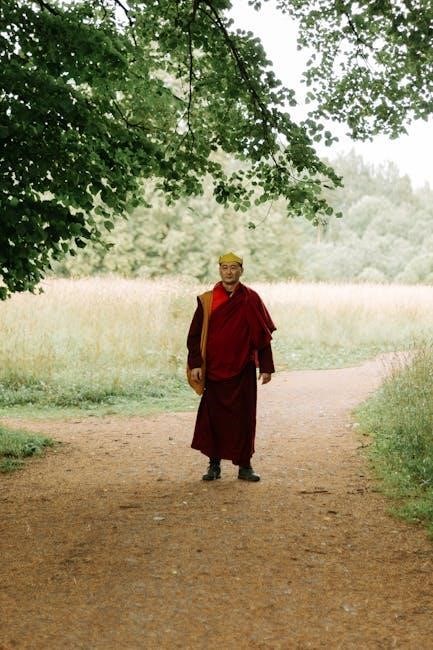
Understanding Buddhist Philosophy & Happiness
Buddhist philosophy links happiness to selfless acts; sharing, supporting others, and alleviating suffering are vital for achieving a full and lasting joyful life.
The Role of Compassion and Generosity
Compassion and generosity aren’t merely virtues, but foundational practices for cultivating happiness, according to Buddhist teachings.
Extending kindness, alleviating the suffering of others, and actively supporting those less fortunate directly contribute to inner peace and lasting joy.
This selfless action shifts focus away from personal anxieties, fostering a sense of interconnectedness and profound fulfillment.
Happiness as a Skill, Not Just an Emotion
Contrary to popular belief, happiness isn’t a fleeting emotion dictated by external circumstances; it’s a skill honed through consistent practice, as demonstrated by Buddhist monks.
Matthieu Ricard’s work highlights that happiness can be actively developed, much like any other capability, through mental training and mindful awareness.
This perspective empowers individuals to take control of their well-being, rather than passively awaiting positive experiences.
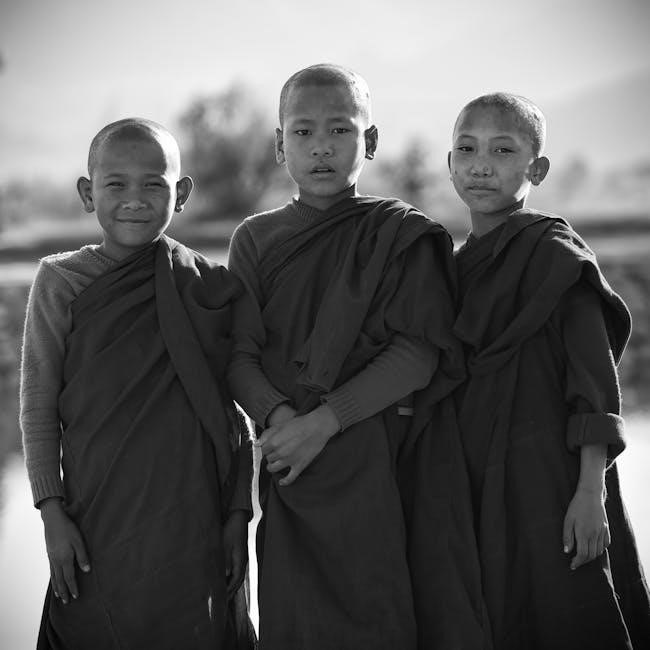
Mindfulness: The Foundation of a Monk’s Joy
Mindfulness, cultivated through meditation, sharpens focus and allows monks to experience joy in the present moment, enhancing daily life with awareness.
Sharpening Focus Through Meditation
Meditation is central to a monk’s practice, serving as a powerful tool to refine concentration and mental clarity. This practice isn’t about emptying the mind, but rather observing thoughts without judgment, allowing for a deeper understanding of one’s internal landscape.
Through consistent meditative practice, monks develop the ability to gently redirect attention when it wanders, strengthening their capacity for sustained focus. This honed concentration extends beyond the meditation cushion, influencing all aspects of daily life and fostering a sense of calm amidst chaos.
Living Mindfully in Daily Life
Mindfulness, cultivated through meditation, extends far beyond formal practice for monks, permeating every moment of their existence. Each action – eating, walking, working – becomes an opportunity for present moment awareness, a conscious engagement with experience.
This deliberate attention fosters appreciation for the simple things, reducing reactivity and cultivating a sense of peace. By fully inhabiting each moment, monks diminish the power of worries about the future or regrets about the past, embracing the fullness of now.
Emotional Regulation: A Monk’s Advanced Techniques
Monks master emotional control via mental imagery and focused techniques, skills studied by psychologists to understand human potential and inner resilience.
Emotional Control and Mental Imagery
Buddhist monks cultivate remarkable emotional regulation, a skill attracting attention from psychological researchers seeking to unlock human potential. This isn’t suppression, but a refined awareness and skillful response to feelings.
Techniques involve vividly employing mental imagery – visualizing peaceful scenes or compassionate figures – to redirect negative emotional currents. This practice fosters detachment, allowing monks to observe emotions without being overwhelmed, ultimately leading to greater equanimity and inner peace.
Developing Inner Resilience
A monk’s path emphasizes building resilience, not by avoiding life’s inevitable difficulties, but by fundamentally changing one’s relationship to them.
This involves embracing the concept of “No Mud, No Lotus,” recognizing that suffering is integral to growth. Through mindfulness and acceptance, monks learn to navigate challenges with equanimity, transforming pain into wisdom and strengthening their capacity for joy, even amidst adversity.
The Power of Loving-Kindness (Metta)
Metta practice cultivates boundless compassion, radiating goodwill to all beings—near, far, and everywhere—fostering interconnectedness and profound inner peace.
Radiating Compassion to All Beings
Monks extend loving-kindness universally, visualizing its spread in all directions – above, below, and throughout the cosmos. This practice isn’t limited to loved ones; it encompasses all sentient beings, even those causing harm.
Cultivating this expansive compassion dissolves boundaries, fostering a deep sense of connection and reducing feelings of separation. It’s a powerful antidote to negativity and a cornerstone of lasting happiness.
Extending Loving-Kindness Without Limits
The practice of Metta, or loving-kindness, isn’t restricted by personal preferences or perceived worthiness. Monks intentionally direct benevolent wishes towards all – friends, enemies, and strangers alike.
This boundless compassion challenges ingrained biases and fosters a profound sense of interconnectedness. By releasing limitations on who deserves kindness, one unlocks a deeper, more sustainable form of joy and inner peace.
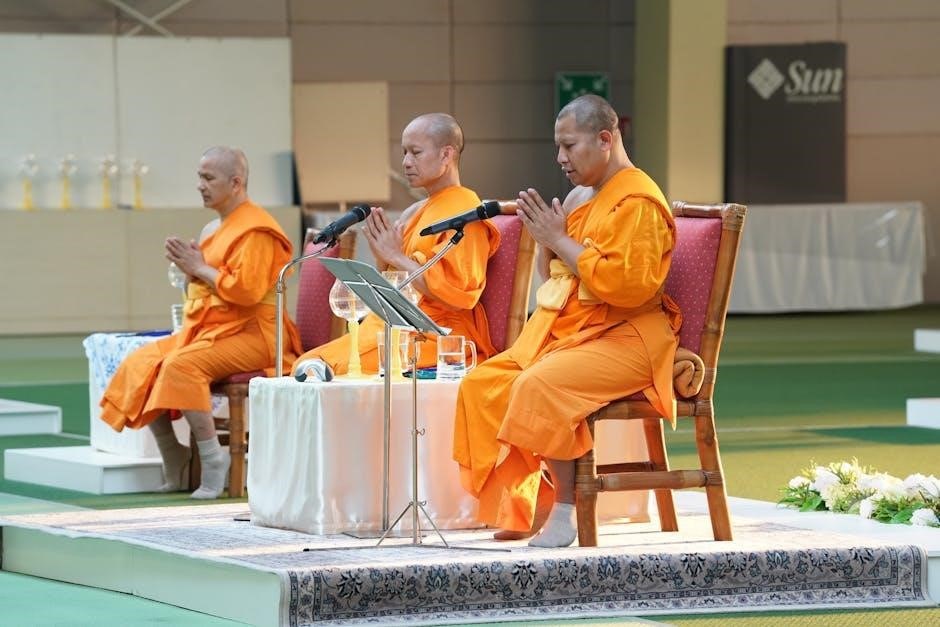
Practical Exercises for Cultivating Happiness
Daily meditation and gratitude practices, as advocated by Buddhist monks, are essential tools for developing mindfulness and fostering lasting inner contentment.
Daily Meditation Practice
Establishing a consistent meditation routine is paramount. Begin with short sessions, gradually increasing duration as focus sharpens. Monks utilize meditation to cultivate awareness, observing thoughts without judgment.
This practice, honed over centuries, enhances emotional regulation and reduces stress. Sharpening focus through meditation, as suggested by various teachers, unlocks a deeper sense of inner peace and joy.
Cultivating Gratitude
A monk’s path emphasizes appreciating the present moment and recognizing the abundance already present in life. Regularly acknowledging blessings, both large and small, shifts perspective.
This practice counters negativity and fosters contentment. Buddhist philosophy highlights sharing and supporting others as vital for lasting happiness, extending gratitude outwards to all beings, enriching one’s own well-being.
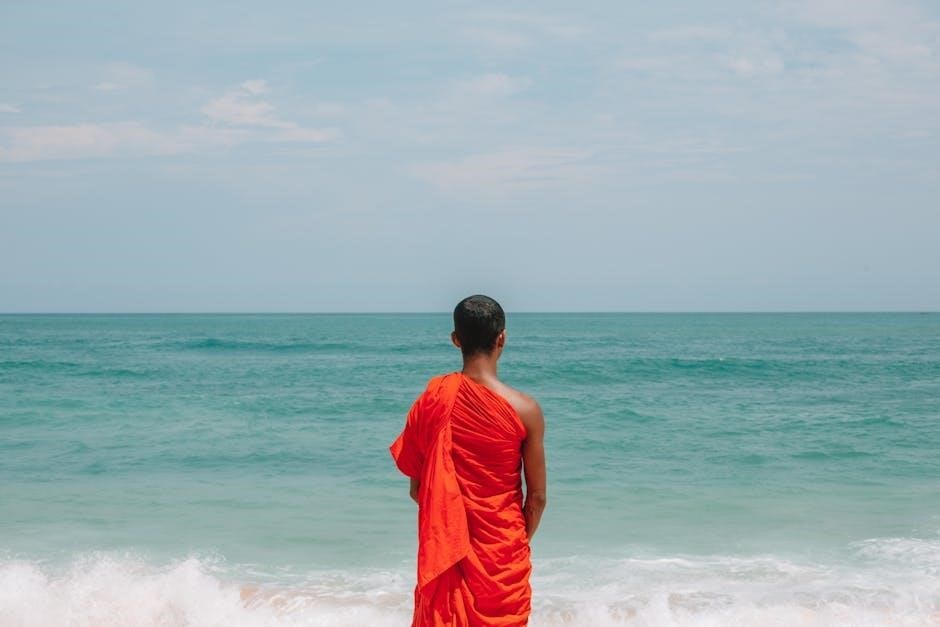
The Importance of Non-Attachment
A monk finds freedom by releasing expectations and material possessions, understanding that clinging to impermanent things fuels dissatisfaction and hinders true joy.
Letting Go of Material Possessions
Monks intentionally minimize possessions, recognizing attachment to things creates suffering and distracts from inner peace. This isn’t about deprivation, but liberation. By relinquishing the need to acquire and hold onto material goods, one cultivates contentment.
This practice fosters freedom from worry about loss, damage, or the endless cycle of wanting more. True happiness arises not from having, but from being, unburdened by material desires.
Releasing Expectations
A monk’s path emphasizes accepting life as it unfolds, rather than clinging to preconceived notions of how things should be. Expectations breed disappointment; letting them go cultivates equanimity. This doesn’t mean lacking goals, but detaching from specific outcomes.
Embrace the present moment without the weight of future projections. Serenity arises from accepting reality, fostering inner peace and resilience in the face of life’s uncertainties.
The Monk’s View on Relationships
Monks prioritize loving connections built on compassion and understanding, fostering serenity through mindful interaction and acceptance of others’ imperfections.
Developing Loving Relationships
Cultivating genuine connection, as taught by Zen Buddhist monks, centers on presence and empathetic listening, moving beyond superficial interactions. This involves actively seeking to understand another’s perspective, offering support without judgment, and practicing forgiveness. Relationships flourish when rooted in loving-kindness, radiating outwards to nurture mutual growth and shared joy, fostering serenity for all involved.
Serenity in Connection
A monk’s path reveals that true serenity isn’t found in isolation, but within mindful connections. Accepting imperfections in others, and ourselves, is key. By releasing expectations and embracing the present moment within relationships, we cultivate inner peace. This fosters a sense of belonging and mutual support, enriching life’s journey.
Overcoming Obstacles to Happiness
Monks navigate negativity through acceptance and resilience, transforming difficult circumstances into opportunities for growth and deeper understanding of the self.
Dealing with Negative Emotions
A monk’s path doesn’t deny negative emotions, but observes them without judgment. Utilizing mental imagery and emotional control—skills studied by psychologists—allows for detachment. Instead of suppression, feelings are acknowledged as temporary states, like clouds passing in the sky.
This mindful approach, rooted in Buddhist philosophy, prevents emotions from escalating and disrupting inner peace. Recognizing the impermanence of feelings is key to navigating hardship.
Navigating Difficult Circumstances
Monks embrace the concept of “No Mud, No Lotus,” understanding that growth arises from adversity. Difficulties aren’t viewed as obstacles, but opportunities for transformation and deeper understanding. Acceptance and equanimity, central to Zen Buddhism, foster resilience.
By acknowledging suffering—rather than resisting it—a monk finds peace amidst chaos, mirroring the ability to find balance in a fast-paced world.
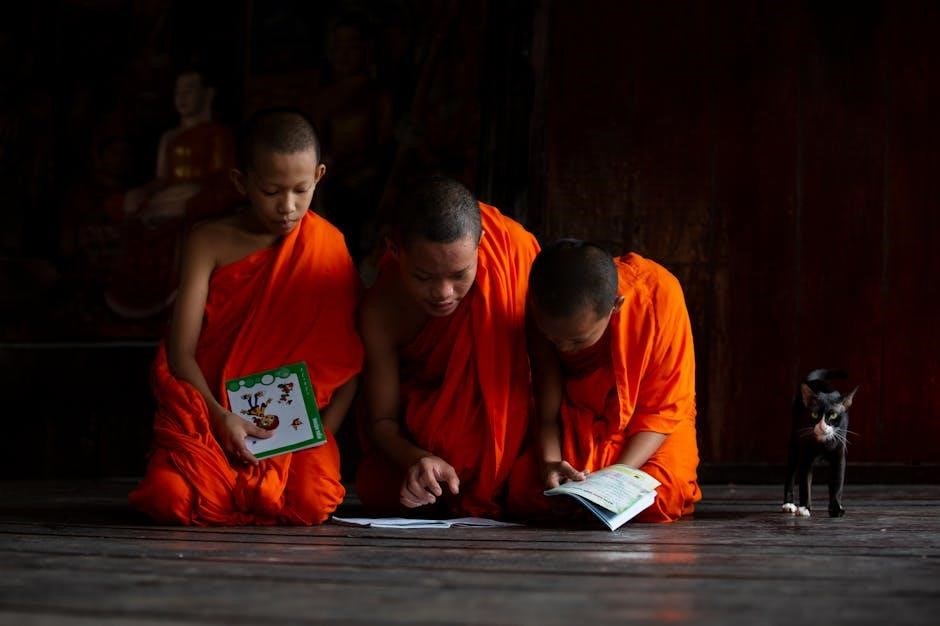
The Zen Buddhist Approach to Serenity
Zen Buddhism emphasizes finding peace in simplicity, accepting what is, and cultivating equanimity—essential elements for a monk’s serene and joyful existence.
Finding Peace in Simplicity
A monk’s path often involves relinquishing material possessions and embracing a minimalist lifestyle, mirroring the Zen Buddhist ideal. This isn’t deprivation, but liberation from the anxieties of accumulation.
By reducing external dependencies, monks cultivate inner contentment and focus on spiritual growth. Simplicity allows for deeper presence and appreciation of the present moment, fostering a profound sense of peace.
Acceptance and Equanimity
Zen Buddhism emphasizes accepting life’s impermanence and cultivating equanimity—mental calmness and composure. This doesn’t mean passively enduring hardship, but rather acknowledging reality without resistance.
Monks learn to observe thoughts and emotions without judgment, understanding they are transient phenomena. This acceptance fosters inner stability, allowing them to navigate challenges with grace and maintain peace amidst chaos.
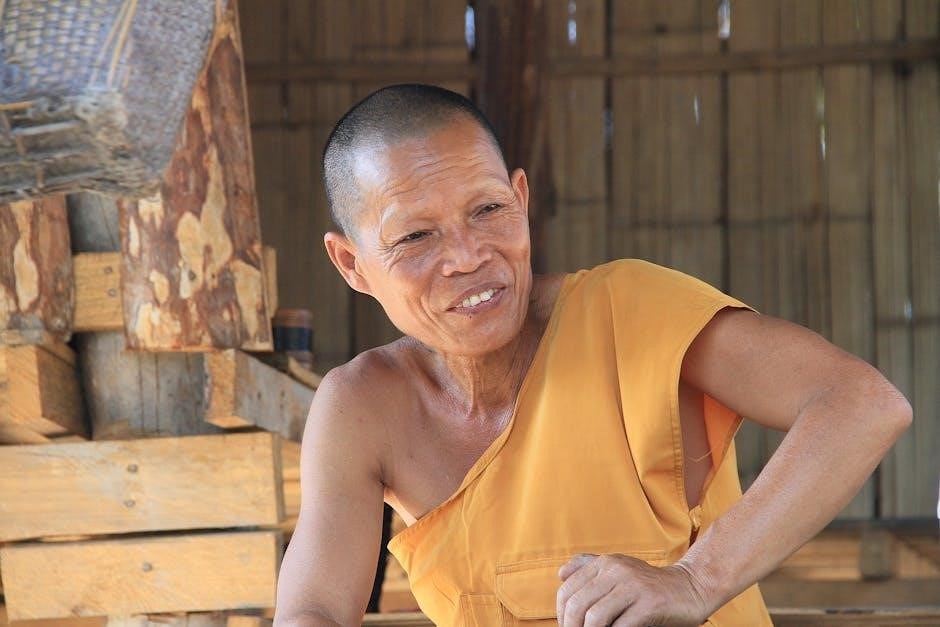
The Hare Krishna Movement & Happiness
Hare Krishna monks find joy through devotional service and strong community bonds, often seen offering spiritual connection in public spaces like Liverpool city centre.
Community and Devotion
The Hare Krishna Movement emphasizes the power of sanga – association with devotees – as central to spiritual growth and happiness. This collective practice fosters a supportive environment where individuals can deepen their devotion and experience shared joy.
Through kirtan (chanting), festivals, and selfless service, members cultivate a strong sense of belonging and purpose. This devotion isn’t solitary; it thrives within a community dedicated to shared spiritual ideals, offering a pathway to lasting contentment.
Finding Joy in Service
Hare Krishna monks demonstrate that happiness blossoms through selfless service, or seva, extending beyond personal gain. This dedication to others, seen on Liverpool’s streets, embodies a core Buddhist principle: alleviating the suffering of those less fortunate.
By offering their time and energy without expectation, monks experience a profound sense of fulfillment. Seva shifts focus outward, diminishing self-centeredness and cultivating genuine compassion – a direct route to inner peace and joy.
Buddhism for Everyday Life
Buddhism provides practical tools for “normal” people to enhance well-being, integrating principles into modern living for a healthier, more mindful existence.
Becoming Healthier and Less “Normal”
The pursuit of happiness, through a monk’s lens, often involves a deliberate stepping away from societal norms and expectations. This isn’t about rejecting convention entirely, but rather questioning what truly contributes to lasting contentment. Buddhism offers a path to cultivate inner peace by diminishing attachment to external validation and material possessions, fostering a healthier, more authentic self.
Integrating Buddhist Principles into Modern Living
Adapting ancient wisdom to contemporary life requires mindful application of Buddhist teachings. This involves incorporating practices like daily meditation to sharpen focus and cultivate gratitude, even amidst a fast-paced world. By embracing non-attachment and compassion, individuals can navigate challenges with greater equanimity and find joy in simplicity, fostering well-being.
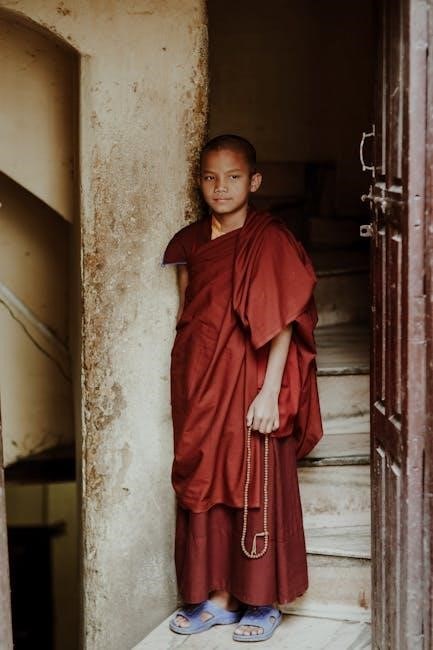
The Concept of “No Mud, No Lotus”
This principle, popularized by Thich Nhat Hanh, emphasizes that suffering is integral to growth; pain transforms into blossoming potential for happiness.
Transforming Pain into Growth
Buddhist teachings don’t advocate escaping discomfort, but rather embracing it as fertile ground for inner development. Like the lotus flower rising from muddy waters, monks understand that profound beauty and joy emerge because of, not in spite of, hardship.
Acknowledging suffering allows for its skillful processing, fostering resilience and wisdom. This isn’t passive acceptance, but active engagement with challenges, viewing them as opportunities for profound personal evolution and lasting happiness.
Acknowledging and Embracing Suffering
A monk’s path isn’t about eliminating pain, but cultivating a mindful relationship with it. Avoiding suffering only prolongs it; direct engagement, rooted in compassion, dissolves its power. This acceptance isn’t resignation, but courageous presence with what is.
By fully acknowledging discomfort—emotional, physical, or mental—we create space for healing and growth, mirroring the “No Mud, No Lotus” principle of transformation.

The Benefits of a Monk’s Lifestyle
A monastic existence demonstrably reduces stress and anxiety, fostering increased well-being through practices like meditation and mindful living, promoting inner peace.
Reduced Stress and Anxiety
The disciplined lifestyle of a monk, centered around meditation and mindfulness, actively combats the pervasive stressors of modern life. By intentionally cultivating present moment awareness, monks diminish reactivity to anxieties and worries. This practice, honed over centuries, fosters emotional regulation and a sense of inner calm.
Furthermore, detachment from material possessions and external validation significantly reduces sources of stress. The focus shifts inward, nurturing contentment independent of circumstance, leading to sustained peace and diminished anxiety levels.
Increased Well-being
A monk’s path prioritizes cultivating positive mental states like compassion, gratitude, and loving-kindness, demonstrably boosting overall well-being. This isn’t merely emotional positivity, but a deep-seated sense of purpose and connection.
Through practices like Metta (loving-kindness meditation), monks expand their capacity for joy and contentment, radiating positivity outwards. This lifestyle, focused on inner development, fosters resilience and a lasting sense of fulfillment, exceeding typical notions of happiness.
Applying Monk Wisdom to Modern Challenges
Monk teachings offer balance amidst fast-paced life, even extending to unexpected areas like password security—mindfulness aids focus and reduces stress.
Password Security & Mental Wellbeing (A Tangential Connection)
The frustration of forgetting a KeyPass password, as one user experienced, mirrors the Buddhist concept of non-attachment. Clinging to remembering everything creates anxiety.
A monk’s path emphasizes letting go of control, accepting impermanence. Similarly, robust password management—relying on systems, not fallible memory—reduces mental load.
This acceptance fosters serenity, demonstrating how ancient wisdom surprisingly applies to modern digital life, promoting wellbeing beyond meditation cushions.
Finding Balance in a Fast-Paced World
Buddhist teachings offer a counterpoint to relentless modern speed, advocating mindfulness as a skill, not merely an emotion, as highlighted by Matthieu Ricard’s work.
Monks cultivate inner peace through meditation, sharpening focus and enhancing relationships—techniques applicable to navigating daily chaos.
Embracing simplicity, acceptance, and equanimity, as seen in Zen Buddhism, allows for a more centered existence amidst constant demands, fostering lasting happiness.
Resources for Further Exploration
Explore books by Thich Nhat Hanh and Matthieu Ricard, alongside online communities and meditation apps, to deepen your practice.
Recommended Books and Teachers
For a profound understanding, begin with Thich Nhat Hanh’s “No Mud, No Lotus,” exploring suffering’s transformative power. Matthieu Ricard’s work demonstrates happiness as a cultivatable skill.
Seek guidance from experienced teachers within Buddhist traditions, and consider exploring resources from the Hare Krishna Movement for insights into devotion and community.
Online Communities and Meditation Apps
Numerous online platforms support your journey; explore communities fostering mindfulness and compassion. Meditation apps offer guided practices, aiding focus and emotional regulation—skills honed by monks.
Leverage these tools to integrate daily meditation, cultivate gratitude, and extend loving-kindness. Remember, consistent practice is key to unlocking lasting well-being and serenity.
Embarking on Your Own Journey to Happiness
The monk’s path isn’t about escaping life, but embracing it fully—transforming pain into growth, acknowledging suffering as a catalyst for wisdom.
Integrating these principles—mindfulness, compassion, non-attachment—cultivates resilience and joy. Begin today, with small steps, and discover the profound happiness within.